A façade, not a new building
A veneer is a façade. Read the drawings before you build.
Dated cost bands with the source named on every line, the difference between porcelain and composite spelled out, snap-on appliances explained without a sales link — and the one fact the brochures whisper: the enamel that comes off first never grows back.
The files
Full index →Lead sheet
Does Insurance Cover Veneers? The Exclusion, Explained
One word — cosmetic — decides almost every claim. Where the rare exceptions live, what a predetermination is for, and the discount-plan angle sold near this question.
Open the file →
Types of Veneers: The Sample Board, Laid Out Honestly
Four genuine categories, not the dozen the brochures imply — what each is made of, what each costs per the sources, and who each honestly fits.
A-08Aug 8, 2026Reading Veneer Before-and-After Photos Like an Auditor
This site publishes no smile photos, and this file is the reason: what lighting, staging and selection do to 'results' — and how to audit the albums clinics show you.
A-07Aug 3, 2026No-Prep Veneers: What 'No Drilling' Really Means
The most seductive label in cosmetic dentistry, taken apart: what minimal preparation really promises, who it genuinely fits, and the contradiction sitting in its own sources.
A-06Jul 29, 2026What Happens to Teeth Under Veneers: Prep, Plainly Told
The part the brochures rush past: what the drill takes, what the tooth looks like mid-process, and what a covered tooth needs from you afterwards.
A-05Jul 24, 2026Bonding vs Veneers: Patch Repair or a Whole New Front?
Same resin, two philosophies: bonding repairs the flaw and largely spares the tooth; a veneer replaces the whole front. The decision, drawn honestly.
Why a veneer deserves a set of drawings
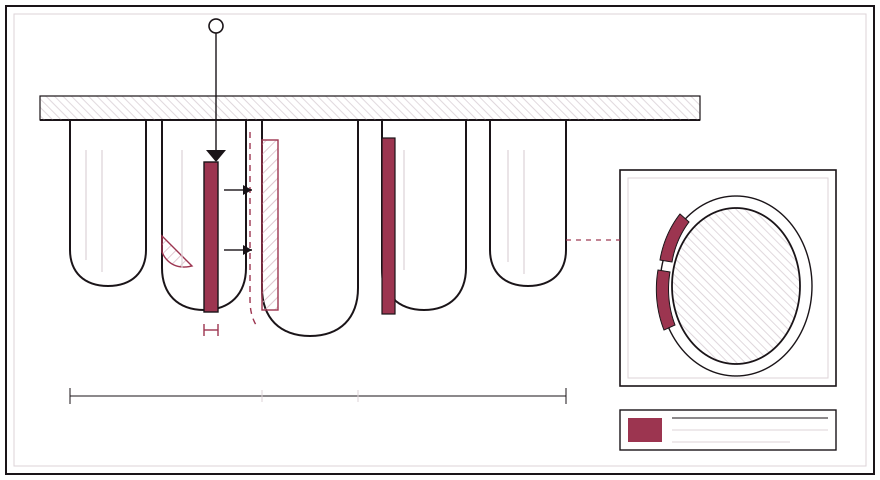
A veneer is cosmetic dentistry's most architectural move: the building stays, and a new front is fixed to it. That framing is not just a metaphor — it is the honest mechanics. Porcelain or composite veneers cover only the front surface of a tooth, and to fix them there a dentist first prepares that surface by removing enamel. The American Dental Association's patient site says it without decoration: treatment is not reversible, because tooth enamel is removed to place a veneer. Facade Files exists to put that sentence, and the real numbers around it, in front of you before a consultation does.
So this site reads like a drawing set rather than a brochure. The veneers cost guide is the schedule: every dollar band is dated, attributed to a named published source, and printed with what it does and doesn't include. The porcelain-vs-composite sheet is the materials specification. The files below are the details — what actually happens to teeth under veneers, whether any of it can be undone, and what snap-on appliances really are.
The drafting rules this site follows
- Every price is a dated band with a named source. Where the only sources conflict or hide behind a bot wall, we print nothing rather than a guess.
- No before-and-after photos, ever — not real ones, not generated ones. Lighting sells more veneers than dentistry does; the photo-reading file shows the tricks instead.
- No dentist writes or reviews here, and we never pretend otherwise. Every page says so where you can see it.
- Refusals are published. Snap-on veneer brands run open affiliate programmes; we explain the category and take no commission on it. The list is on the disclosure page.
- The free answer comes first. An in-person exam and a second opinion cost less than redoing a smile, and neither pays us anything.
Start with the sentence everything else hangs on
If you keep one line from this site, keep this one: conventional veneers are for life, because the prepared tooth can no longer go without a covering. Everything else — material, price, how many teeth, which dentist — is negotiable detail on top of that single structural fact. The drawings are here when you want them.